
A Simple Nervous System Tool for Stressful Moments

Because stress rarely arrives when conditions are perfect
Stress is often treated as something that exists only in the mind — something we should be able to think our way through, manage better, or push past.
But stress is a full-body experience.
When the nervous system perceives pressure or threat, the body responds automatically. Heart rate increases, breathing changes, muscles tighten, thoughts speed up, and the system shifts into survival mode. This can happen quickly and often outside of conscious awareness.
The challenge is that many people are already operating with overloaded nervous systems. Between work demands, constant stimulation, caregiving responsibilities, emotional stress, and the pace of modern life, many people are carrying far more than their systems can sustainably hold.
This is why somatic tools can be so valuable.
Because they offer practical ways to support the nervous system in real time — especially during moments when stress, overwhelm, or emotional activation begin to rise.
And importantly, the most effective tools are often the ones you can use inside everyday life. In meetings. During difficult conversations. While commuting. Between responsibilities. In moments where you need support immediately, not hours later.
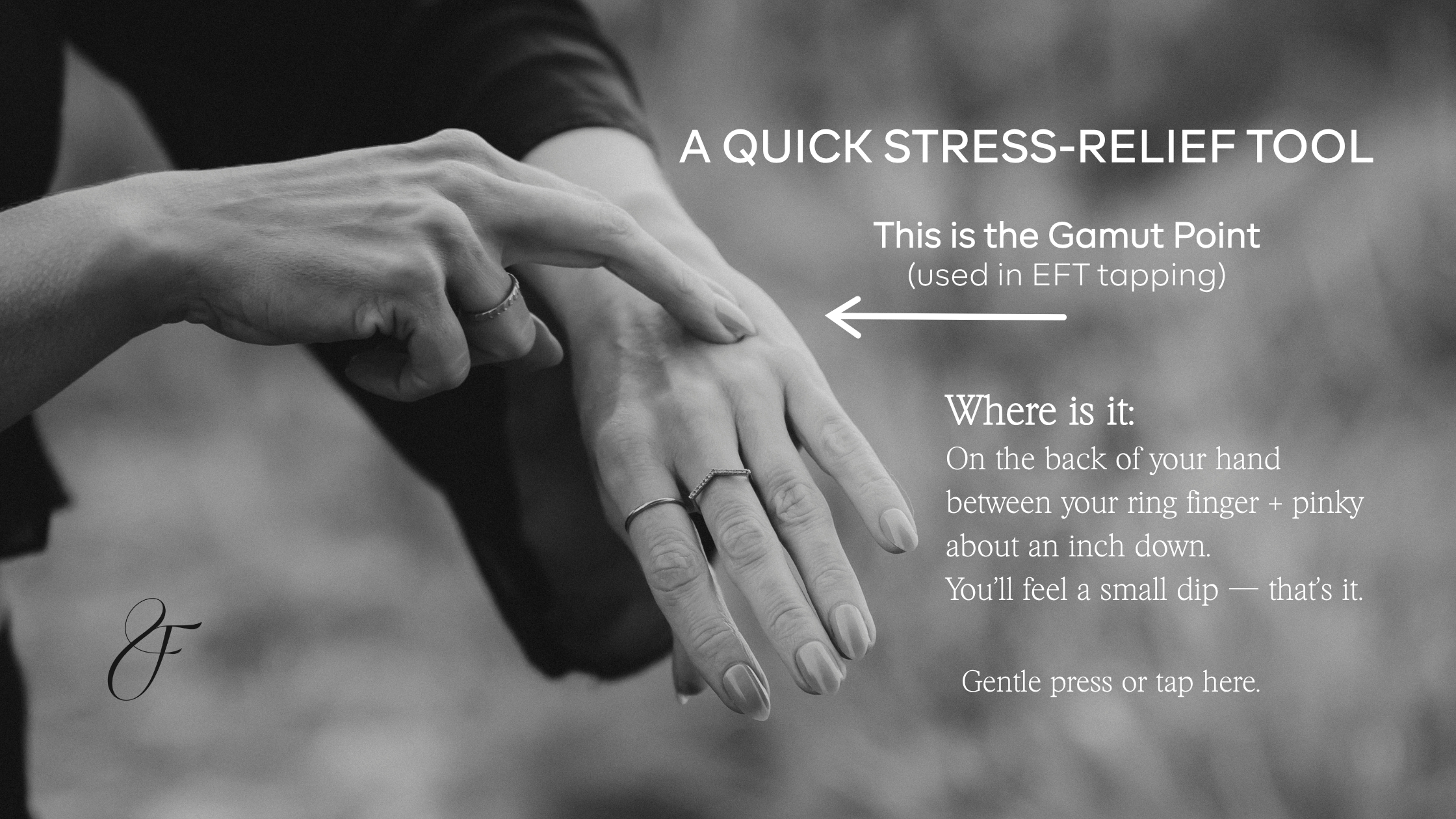
One of my favourite tools for this is the Gamut Point — a simple yet powerful point used in Emotional Freedom Technique (EFT) tapping.
What Is EFT Tapping?
Emotional Freedom Technique (EFT), often called tapping, works with the body’s natural energy and nervous system pathways — similar to acupuncture or acupressure, but using gentle touch instead of needles.
By stimulating specific points on the body, EFT helps:
calm the nervous system
interrupt stress and anxiety loops
soften emotional intensity
support emotional processing without overwhelm
It’s not about forcing release.
It’s about creating enough safety for the body to settle.
The Gamut Point: A Tiny Tool with Big Reach
The Gamut Point is located on the back of the hand and is often used to help calm mental overwhelm, emotional reactivity, and stress in the moment.
How to Find It
Turn your hand so you’re looking at the back
Find the space between your ring finger and pinky finger
Move about one inch down toward your wrist
You’ll feel a small dip or tender spot — that’s the point
You can use either hand.
Why This Point Can Be So Supportive
The Gamut Point is often used to help regulate moments of:
overwhelm
emotional reactivity
racing thoughts
stress activation
nervous system overload
Stimulating this point can help bring the system out of survival mode and back into a more regulated state. This helps the body recognize a little more safety in the moment. And often, that’s what creates enough space to respond differently.
The Most Important Part? You Can Use It Anywhere.
This is what makes somatic tools powerful. They don’t need to be complicated to be effective.
You can use the Gamut Point:
under the table during a meeting
in the bathroom between appointments
while commuting
during difficult conversations
sitting in your car before walking into something stressful
while trying not to emotionally shut down at a family dinner
No one even has to know you’re doing it.
Because regulation is not built only in the big healing moments. It’s built in the micro-moments. The tiny repeated moments where you interrupt survival patterns and help the body return to itself. Over and over again.
How to Use It
Gently tap or press the Gamut Point
Slow your breathing
Notice your body without trying to immediately fix or change it
Stay there for 30–60 seconds, or longer if supportive
Simple. Practical. Accessible.
And sometimes, that’s exactly what the nervous system needs.
Let’s Be Honest About What This Tool Is — and Isn’t
Is tapping one point going to completely resolve years of accumulated stress or trauma? No. But that doesn’t make it insignificant.
Because these small moments matter.
The nervous system changes through repetition. Through consistency. Through building new experiences of safety over time.
And often, sustainable change is less about dramatic breakthroughs and more about learning how to support yourself differently inside everyday life.
This Is Why I Care So Deeply About This Work
One of the biggest things I’ve noticed in my work is that many high-functioning people are operating far beyond what their nervous systems can sustainably hold.
They’re capable, intelligent, driven, and often deeply committed to the work they’re doing. From the outside, they may appear successful or “fine,” but internally their systems are carrying a significant amount of pressure.
Over time, this can start to show up as:
chronic stress and anxiety
emotional overwhelm
difficulty slowing down or resting
burnout
feeling disconnected from themselves or their bodies
nervous system exhaustion that doesn’t fully resolve with time off alone
Many people have learned how to continue performing while dysregulated. But eventually, the body begins asking for a different approach.
This is a large part of why I do the work I do through:
Somatic Psychotherapy
Breathwork
Recalibration Sessions
My work is not simply about helping people manage stress temporarily. It’s about helping people build the internal capacity to navigate their lives differently.
To feel safer in their bodies.
To process stress instead of continuously storing it.
To increase their ability to move through pressure, responsibility, growth, and emotional intensity with more regulation and resilience.
Because lasting change happens when we begin working with the nervous system — not against it.
Regulation Is Built in the Everyday Moments
Healing is rarely built in one monumental moment.
More often, it’s built in ordinary moments:
in the pause before reacting
in the breath you finally take fully
in the decision to soften your shoulders
in the moment you choose to come back to yourself instead of abandoning yourself again
These moments may seem small. But the body remembers them.
And every time you return, you are teaching your nervous system that safety, support, and regulation are possible.